
Data lakes earned their popularity by removing a constraint: store data in its raw, original format first, and worry about structure later. That flexibility is exactly what makes a data lake powerful for analytics, machine learning, and real-time insight — and exactly what turns it into a liability without governance. An ungoverned lake doesn’t stay a lake for long; it becomes a swamp of duplicated, untrusted, hard-to-find data that creates legal and security exposure instead of insight.
What Is a Data Lake?
A data lake is centralized storage for structured, semi-structured, and unstructured data of any size. Unlike a classical data warehouse, which requires data to be reshaped into predefined schemas before it’s stored, a data lake lets teams store raw data in its original format and decide how to structure it later. That’s what makes it useful for advanced analytics, machine learning, and real-time insight — and it’s also exactly the flexibility that becomes a problem without governance in place.
The Risks of Poor Data Lake Governance
Without governance, a data lake accumulates sprawl, duplication, and inconsistency almost by default. Data without sound metadata becomes difficult to trust, locate, or analyze the way it was intended to be used. Inaccurate or outdated data left unchecked can expose an organization to compliance failures, security breaches, and decisions made on bad information — and under most current data regulations, an ungoverned lake isn’t just a quality problem, it’s a legal and financial one.
Benefits of Data Lake Governance
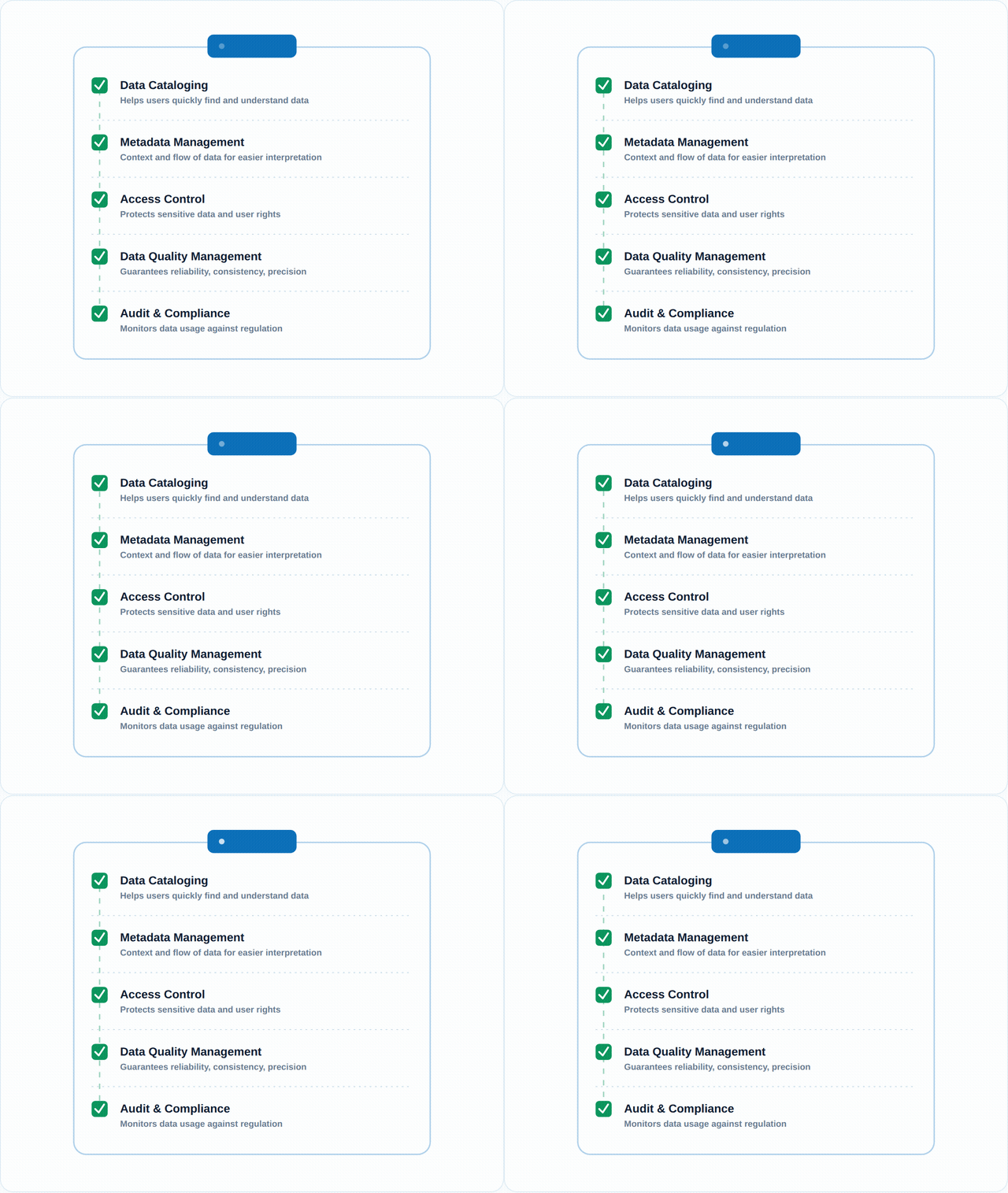
Governance brings order, quality, and security to the entire data ecosystem. The core pillars are:
- Data Cataloging — helps users quickly find and understand data.
- Metadata Management — provides context and traceable flow of data for easier interpretation.
- Access Control — protects sensitive data and enforces user rights.
- Data Quality Management — guarantees reliability, consistency, and precision.
- Audit and Compliance — monitors data usage in line with regulations.
Data Governance Strategies for 2026
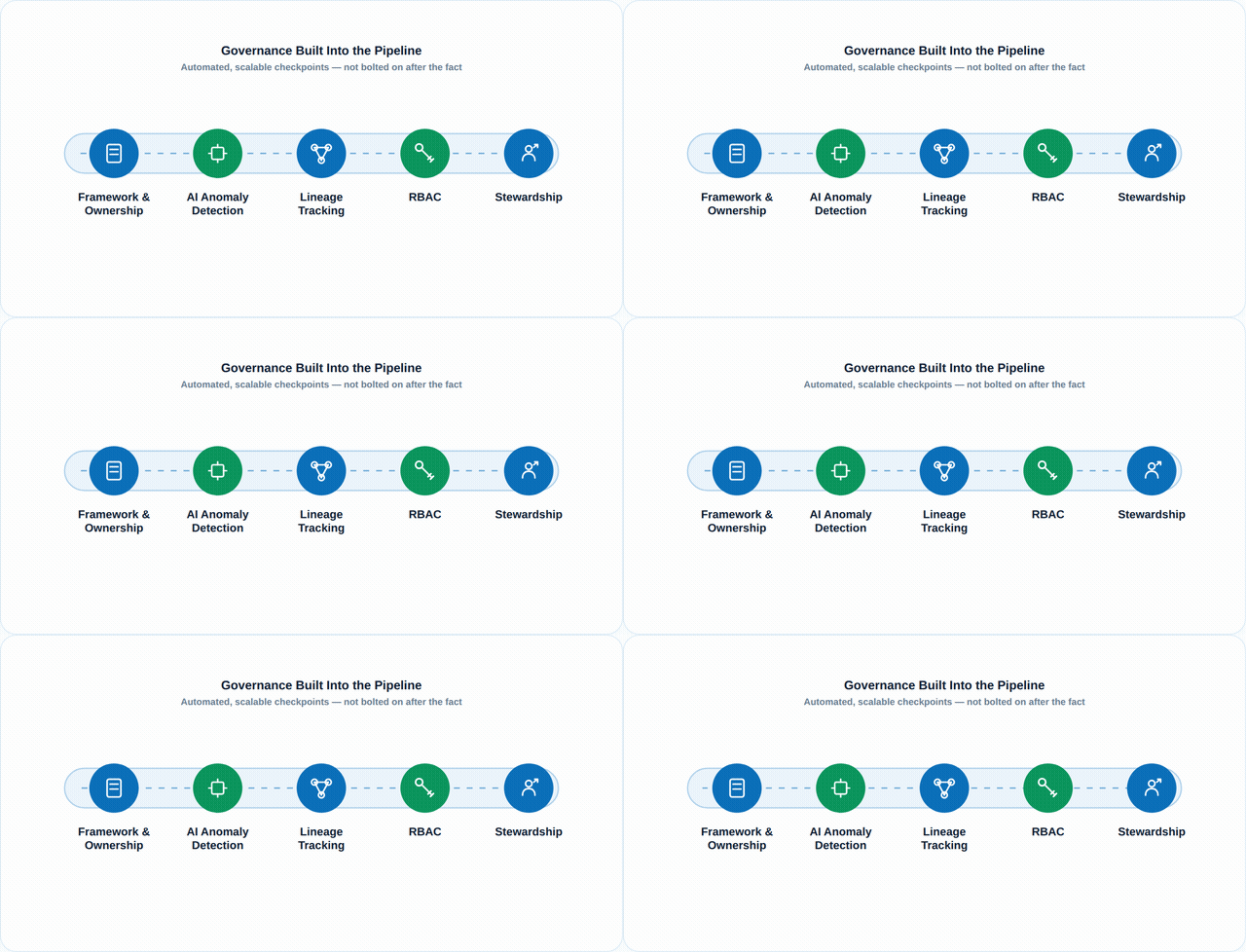
In a fast-moving data environment, governance has to be automated, scalable, and built into the pipeline itself rather than bolted on afterward. The strategies that work:
- Develop a robust governance framework with clear ownership and policies.
- Use AI and machine-learning models for anomaly detection and streamlined data classification.
- Implement data lineage tracking to monitor how data moves and transforms.
- Apply role-based access control (RBAC) for secure collaboration.
- Promote data stewardship to drive accountability across teams.
Future-Proofing Your Data Lake
As data volume and complexity keep escalating, a future-proof data lake embraces cloud-native architecture, real-time analytics, and privacy by design. Governance tooling needs to be dynamic enough to apply one consistent policy layer across hybrid and multi-cloud environments — not a separate rulebook per platform.
Where This Fits in 2026: Regulation Catches Up, and Agents Change the Job
Two forces are pushing data lake governance from best practice to hard requirement in 2026. The first is regulatory: under the EU AI Act, a set of obligations for high-risk AI systems become legally binding on August 2, 2026, including Article 10’s quality criteria for training, validation, and testing datasets, and Article 11’s requirement for detailed technical documentation before market placement. For any organization training or operating AI systems on data drawn from its lake, that data has to be governed well enough to prove where it came from and what quality bar it met — and as of early 2026, a large share of organizations have not yet started that work in earnest.
The second force is architectural: AI agents are becoming a governance problem in their own right. A traditional access model assumes a human makes a decision and an application executes it predictably; an autonomous agent chains tools and makes different choices on every run, which breaks that assumption. The practical answer taking shape across the industry — for example, in how Databricks’ Unity Catalog extends governance to AI agents — is to stop trying to govern what an agent might do and instead govern what it can access and log what it actually did: agents inherit the permissions of the user who invoked them, every action is logged against both identities, and full audit trails capture the exact data touched. At the same time, Apache Iceberg has become the de facto open table format for lakehouses, and the competitive action has shifted to the catalog layer (Unity Catalog, Polaris, Nessie, Gravitino) that applies lineage, access control, and observability consistently across whichever engine or agent is reading the data. Governance, in other words, is becoming the layer that makes a multi-engine, agent-accessed lakehouse usable at all.
The Takeaway
A data lake’s flexibility is also its risk: store anything, in any format, and without governance it degrades into sprawl you can’t trust or secure. The five pillars — cataloging, metadata, access control, quality, and audit — turn that raw storage into something usable, and in 2026 two forces are making that non-optional: the EU AI Act’s binding data-quality and documentation rules for high-risk AI systems, and the rise of AI agents that need governance based on what they can access and what they actually did, not what a human intended.
Join The Conversation
Share your perspective. Comments are moderated before they appear.