
Every database is a bet on how the business will ask questions of its data later. Get that bet wrong, and every new feature means another workaround bolted onto a schema that was never designed for it. Data modeling is how you make that bet deliberately instead of by accident: it’s the discipline of deciding, on purpose, what your data represents, how its pieces relate, and how it will actually be stored, before a single table gets created.
This guide walks through the three levels every data model passes through, what doing this well actually earns you, the real steps to get there, and where the practice has extended in 2026 now that AI agents and automated pipelines have joined analysts as consumers of your data.
The Three Levels of a Data Model
A data model isn’t one artifact, it’s three, each one more concrete than the last.
The conceptual model stays entirely in business language: what entities exist (a customer, an order, a shipment) and roughly how they relate, with zero mention of tables or data types. It’s the version you’d sketch on a whiteboard with a product manager who’s never written SQL.
The logical model adds the detail a conceptual model deliberately leaves out: every entity’s attributes, the exact cardinality of each relationship (one order has many line items, not the other way around), and enough structure that a developer could start reasoning about constraints, without yet committing to a specific database engine.
The physical model is the one that actually runs: table names, column names, data types, primary and foreign keys, indexes, partitioning, and the stored procedures or triggers your database engine enforces. It’s where every earlier decision becomes something a query planner can execute.
You don’t always produce all three as separate documents, especially on a small project, but skipping straight to physical without first agreeing on the conceptual and logical shape is how the same business concept ends up represented three different ways across three different tables.
What You Actually Get From Doing This Well
It’s easy to wave at “data modeling is important” without saying what it actually changes day to day. In practice, it comes down to four things:
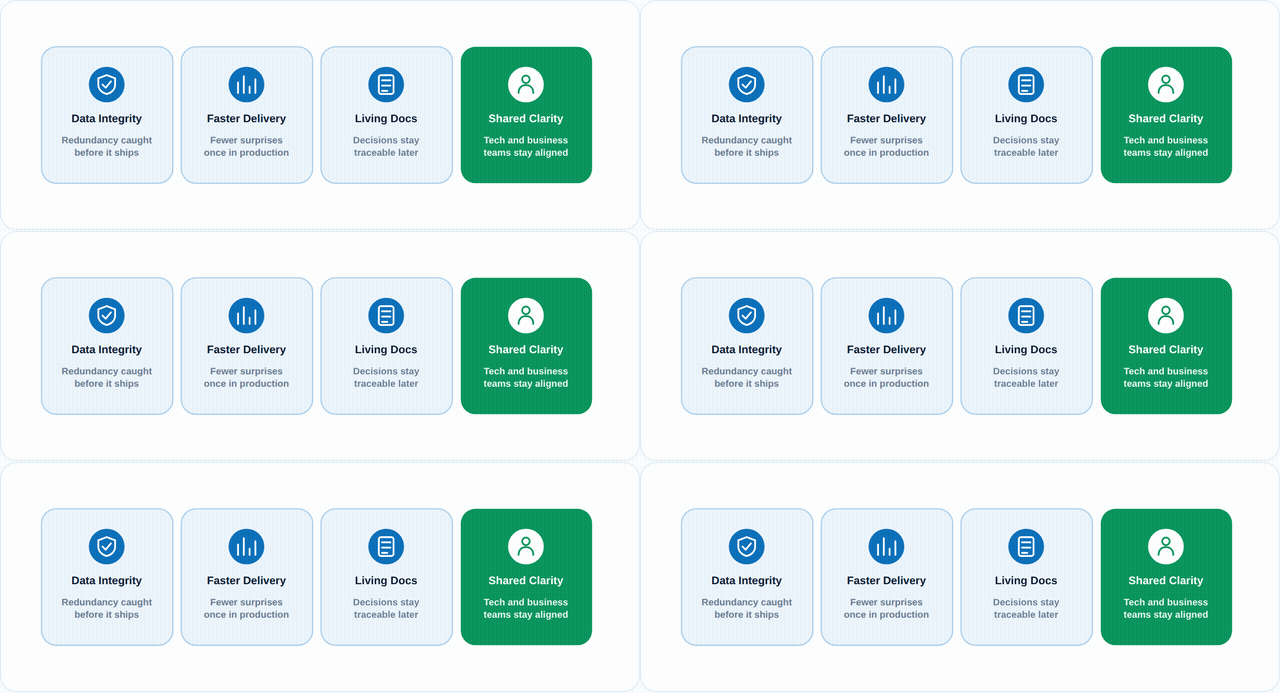
A model forces redundancy and inconsistency to surface during design review, where fixing them costs an afternoon, rather than in production, where fixing them costs a migration. It gives every new engineer a single diagram to read instead of reverse-engineering intent from twelve tables. It keeps the reasoning behind a schema decision somewhere other than one person’s memory. And it gives business stakeholders, who will never read a CREATE TABLE statement, a version of the structure they can actually evaluate and sign off on.
Building a Data Model, Step by Step
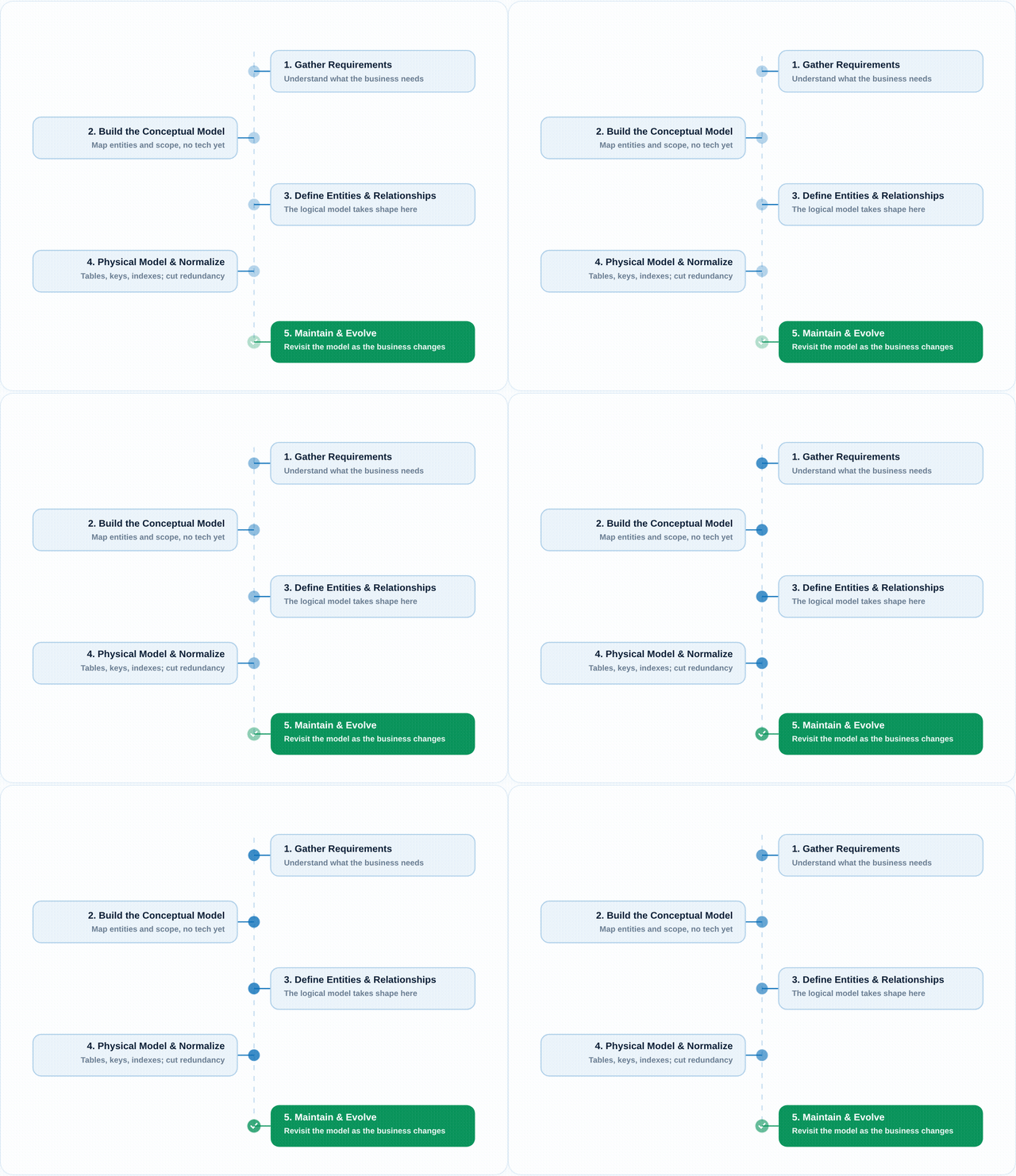
The process isn’t as linear as a five-step list makes it look, you’ll loop back more than once, but the shape holds: start by gathering what the business actually needs and how its processes work, then build a conceptual model that captures entities and scope without any technical commitments yet. From there, define the entities’ attributes and the relationships between them in detail, which is the logical model taking shape, while also identifying where the underlying data will actually come from. Translate that into a physical model next: real tables, keys, and indexes, normalized enough to avoid redundant storage while still being fast to query. None of this is a one-time exercise. The last and most-skipped step is maintaining the model as the business changes, because a data model that isn’t revisited quietly turns into documentation that lies.
Where This Fits in 2026: Semantic Layers and Data Contracts
The conceptual, logical, and physical layers haven’t gone anywhere, but two newer ideas now sit alongside them in a lot of modern data stacks.
A semantic layer sits between the logical model and the dozens of tools that query it, standardizing how a metric or an entity is defined so that “active customer” means the same thing in a dashboard, a report, and an AI agent’s answer, instead of three slightly different SQL definitions scattered across teams. As AI agents increasingly query data directly rather than through a person who already knows the business context, that shared vocabulary has gone from a nice-to-have to something closer to a prerequisite. Vendors across the analytics engineering space have been pushing to standardize this through industry-wide interchange efforts, precisely because an agent without a semantic model is, as more than one practitioner has put it, driving without a map.
Data contracts are the other addition: formal, enforced agreements that specify a dataset’s schema, quality expectations, and who’s allowed to use it for what, checked automatically rather than assumed. They’re effectively what used to live informally in a data modeling document, now encoded as something a pipeline can validate before bad data ships downstream. This matters more as organizations spread data ownership across teams instead of centralizing it in one data lake, since a contract is what keeps a decentralized setup from quietly drifting out of sync.
Neither of these replaces the conceptual/logical/physical foundation. They’re what you add on top once that foundation is solid and more than one system, human or automated, needs to rely on it.
The Takeaway
Data modeling is still, at its core, the same discipline it’s always been: deciding what your data means before deciding how to store it, at three levels of increasing detail. What’s changed by 2026 is who’s reading the result. Semantic layers and data contracts exist because AI agents, automated pipelines, and decentralized teams now consume data alongside human analysts, and all of them need the same shared definition of what a given piece of data actually represents. Get the three levels right first. Everything built on top of them, including the newer layers, depends on that foundation holding.
Join The Conversation
Share your perspective. Comments are moderated before they appear.