
Walk into almost any bank, insurer or manufacturing floor still running on Microsoft SQL Server, and there is a good chance MSBI is quietly doing the heavy lifting behind the scenes. It is not the flashiest tool in a modern data stack, but it is one of the most dependable, and in 2026 it is still running mission critical reporting at companies that never made the evening news for ripping it out.
What MSBI Actually Means
MSBI stands for Microsoft Business Intelligence, and it is easy to misread as a rival to Power BI. It is not. Power BI is the visualization and dashboard layer, the part a business user clicks around in. MSBI is the trio of tools bundled with SQL Server that do the less visible work underneath: pulling data in, shaping it into something analyzable, and pushing finished reports out the door. Most companies running MSBI today use Power BI on top of it, not instead of it.
The Three Tools Behind MSBI
MSBI is really three separate engines working in sequence.
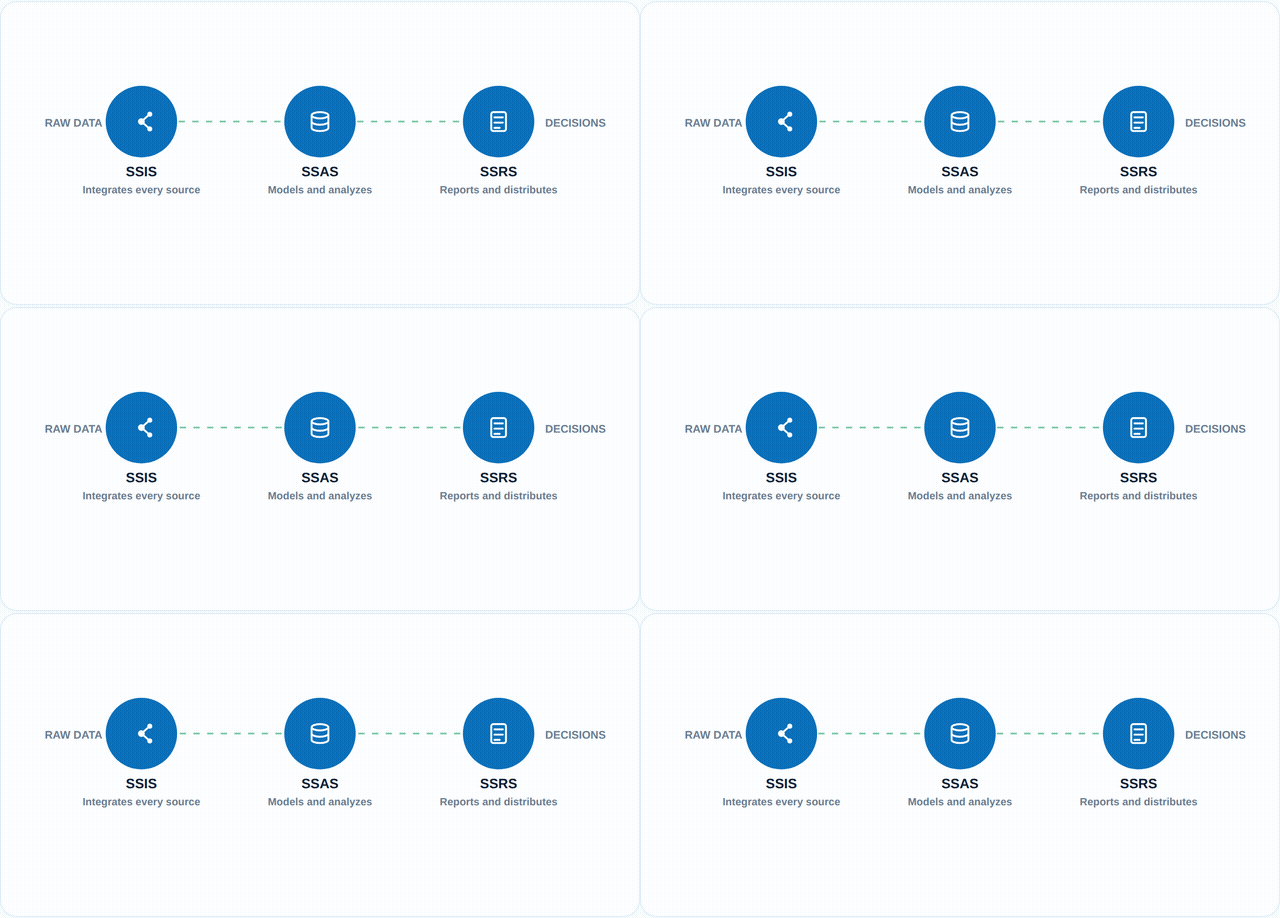
- SSIS (SQL Server Integration Services) moves and reshapes data from wherever it lives, databases, spreadsheets, other applications, into one consistent pipeline.
- SSAS (SQL Server Analysis Services) builds that data into OLAP cubes and tabular models so it can be sliced, aggregated and queried fast, instead of recalculated from scratch every time someone asks a question.
- SSRS (SQL Server Reporting Service) turns the modeled data into the paginated, scheduled and ad hoc reports that actually land in someone’s inbox.
Together they cover the full loop from raw data to a report a manager actually reads.
Why Businesses Still Depend on It in 2026
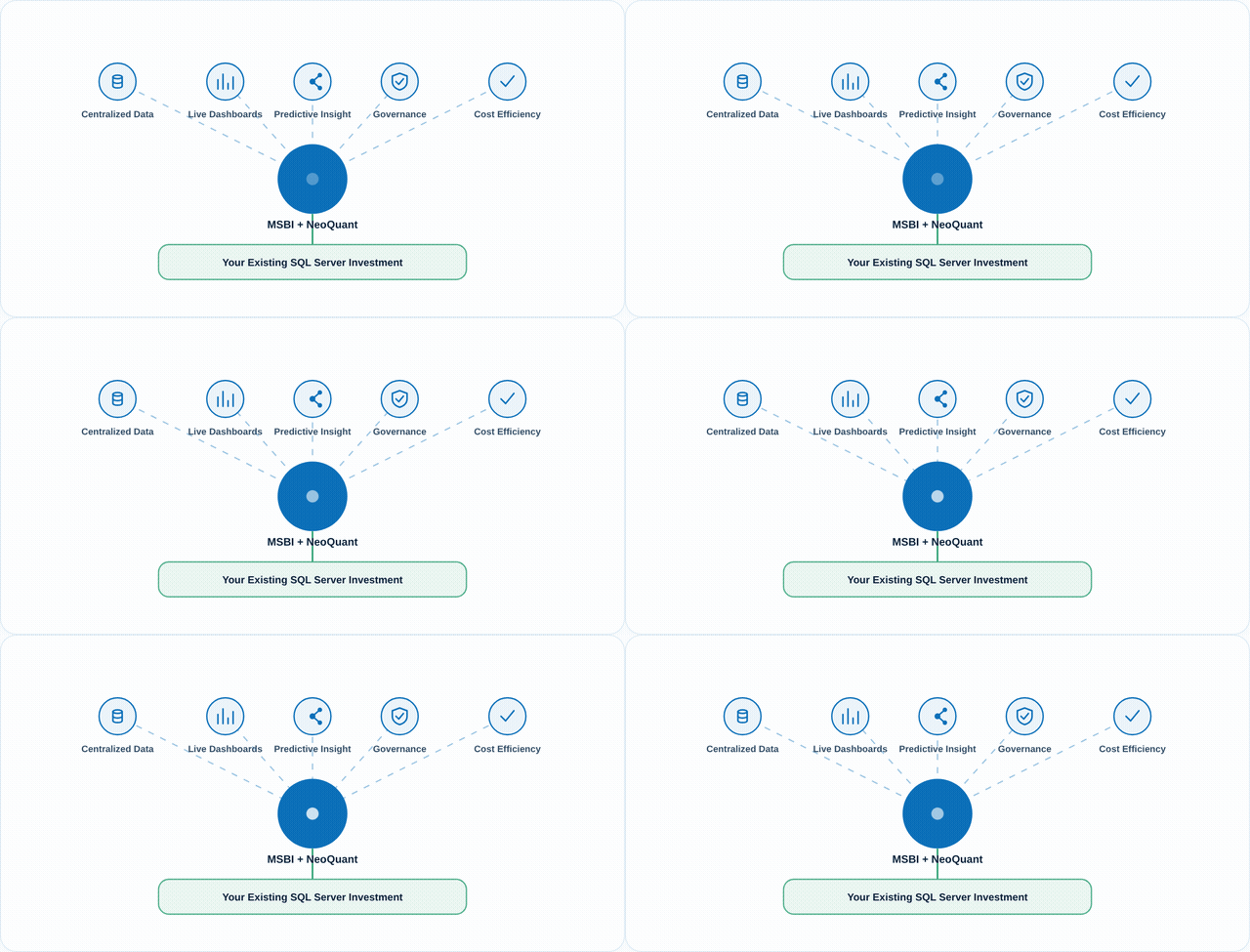
- Centralized data. Instead of five departments pulling numbers from five systems, MSBI consolidates it into one place everyone can trust.
- Real time dashboards. Paired with Power BI, it gives stakeholders a live view of the business instead of a report that was accurate last Tuesday.
- Predictive insight. SSAS’s modeling layer supports forecasting and trend detection without bolting on a separate analytics platform.
- Governance that holds up to audit. Because it runs on infrastructure the business already controls, it fits naturally into regulated environments in finance, healthcare, insurance and government, where data residency and audit trails are not optional.
- Lower marginal cost. If you already own SQL Server licensing, MSBI is largely sunk cost already spent. Ripping it out to pay for a new platform is a harder sell than extending what is already there.
Where MSBI Fits Alongside Power BI and Microsoft Fabric
Here is the part most articles on this topic skip: Microsoft’s own roadmap has moved on. Since 2023, Microsoft has pushed its newer customers toward Microsoft Fabric, a cloud platform that now holds Power BI inside it alongside data pipelines, lakehouses and warehousing. If you are building a brand new, cloud native analytics stack today, Fabric is almost certainly where Microsoft wants you to start, and Azure Analysis Services (the cloud cousin of SSAS) is openly positioned as a stepping stone toward it rather than a long term home.
None of that makes MSBI obsolete. It makes it a mature, on premises option that keeps earning its keep in exactly the situations where a full cloud migration is not the priority: regulated industries, hybrid infrastructure, or teams with deep SSIS and SSRS investment that still works. The honest answer to “should we move” is rarely all or nothing. Most of the businesses we work with run both, letting MSBI handle what it already does well while building new, cloud native work in Fabric.
Should You Modernize, Replace, or Extend Your Stack?
A few signals help make the call.
- Keep and extend MSBI if your reporting is stable, your team knows the stack, and your industry has real compliance or data residency requirements.
- Add Power BI on top if business users need faster, self-service dashboards without touching the underlying SSIS or SSAS investment.
- Start planning a Fabric migration if you are standing up new analytics from scratch, scaling past what on-premises infrastructure comfortably handles, or consolidating multiple legacy BI tools into one cloud platform.
The Takeaway
MSBI earned its reputation the old fashioned way, by working reliably for two decades inside the companies that still run it. In 2026, the question is not whether MSBI is outdated. It is whether your business is one that should extend it, pair it with Power BI, or start migrating pieces of it to Fabric, and that is a decision worth making deliberately rather than defaulting into.
Join The Conversation
Share your perspective. Comments are moderated before they appear.